

Apple AirPods 4 Wireless Earbuds Review
Apple’s fourth-generation AirPods arrive with a clear focus on two things: how they feel during long listening sessions and how they handle the everyday tasks people actually use earbuds for. The AirPods 4 Wireless Earbuds sit in Apple’s lineup as an open-fit design rather than an in-ear model with silicone tips, which shapes much of what they are and who they suit. This review walks through the design changes, the feature set built around the Apple-designed H2 chip, battery expectations, and the practical details worth understanding before deciding whether these earbuds fit your routine.
Design and Comfort
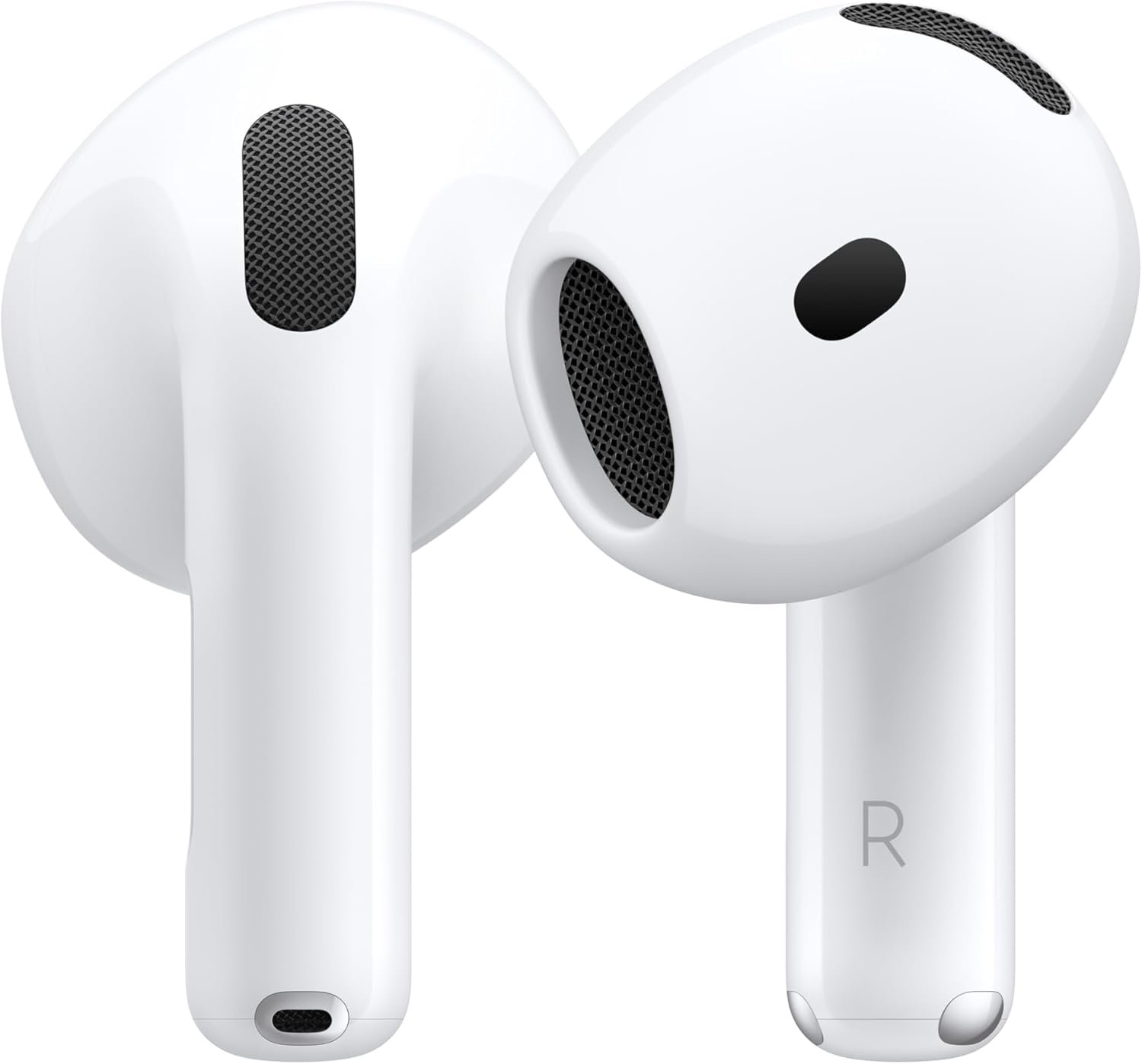
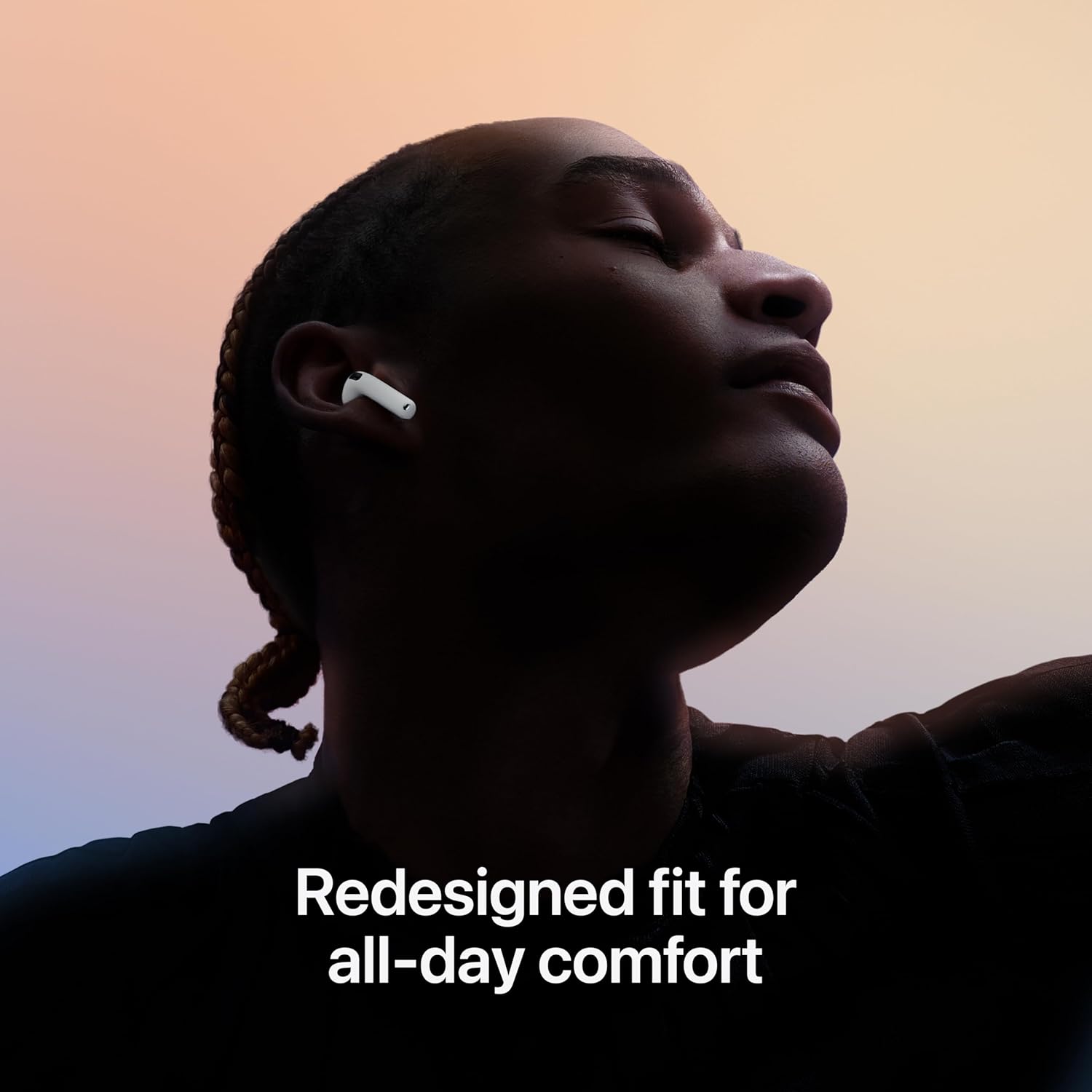
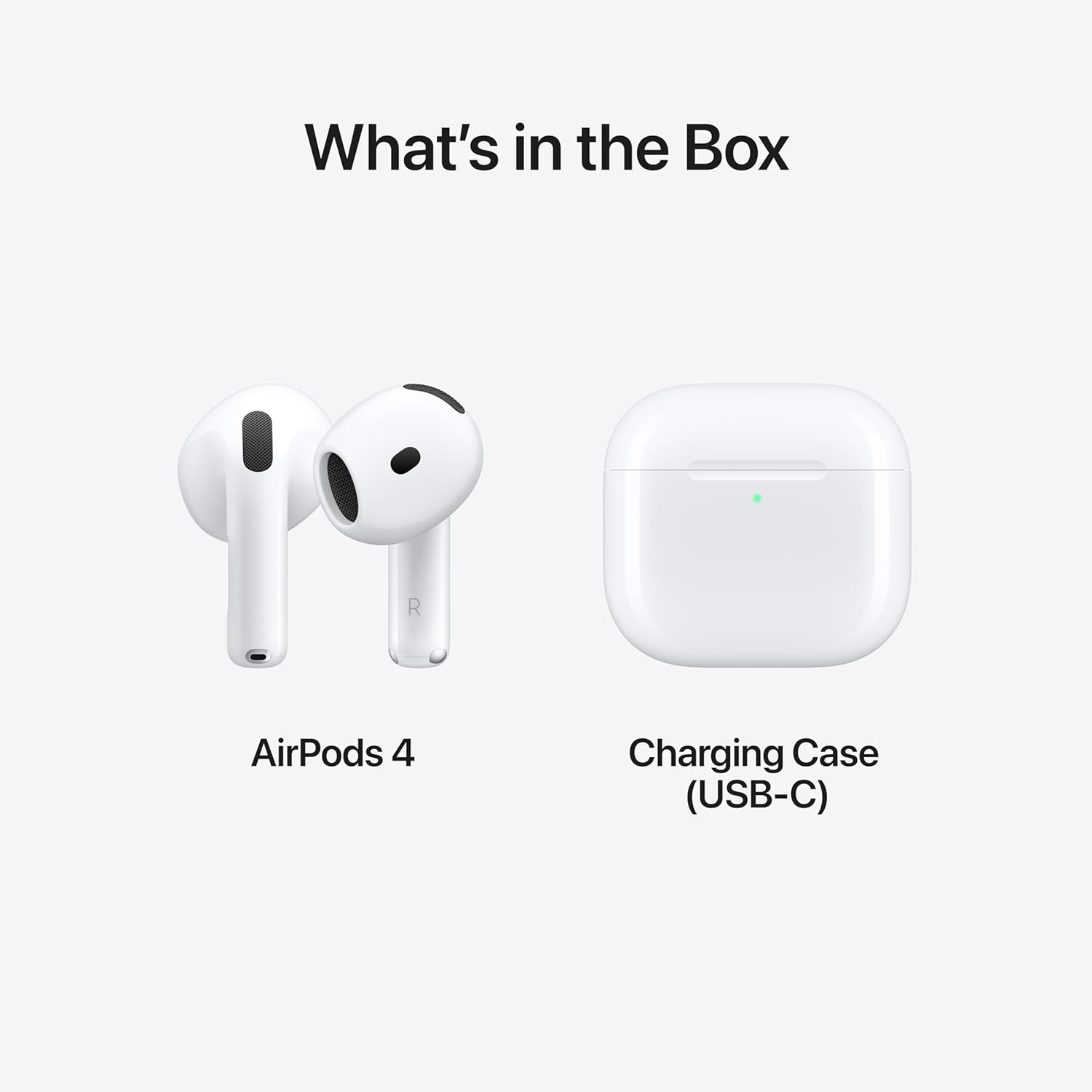
Apple states that the AirPods 4 have been rebuilt for comfort, with a refined contour, a shorter stem, and quick-press controls for music or calls. That combination points to a housing shaped to sit more naturally in the ear while reducing the visual bulk of the stem that hangs below. The quick-press controls replace touch swipes or taps with a squeeze-style interaction, which can be easier to trigger deliberately without adjusting the fit.
Because these are open-fit earbuds, they rest at the entrance of the ear canal rather than sealing it. That design choice tends to appeal to listeners who dislike the plugged feeling of in-ear tips, though it also means the fit relies on the shape of the housing rather than a tip seal. Apple describes the redesign as providing greater stability alongside all-day comfort, so the emphasis is on staying put through normal movement rather than locking into the ear canal.
The charging case has also been reworked. It is more than 10 percent smaller by volume than the previous generation, according to Apple, and it adds USB-C charging. A smaller case is easier to pocket, and USB-C means one less cable type to carry if you already travel with a USB-C charger for other devices.
Features and Technology
The H2 chip sits at the center of the AirPods 4 experience. Apple credits it with improved sound and call quality, and it enables the computational audio processing behind several of the headline features.
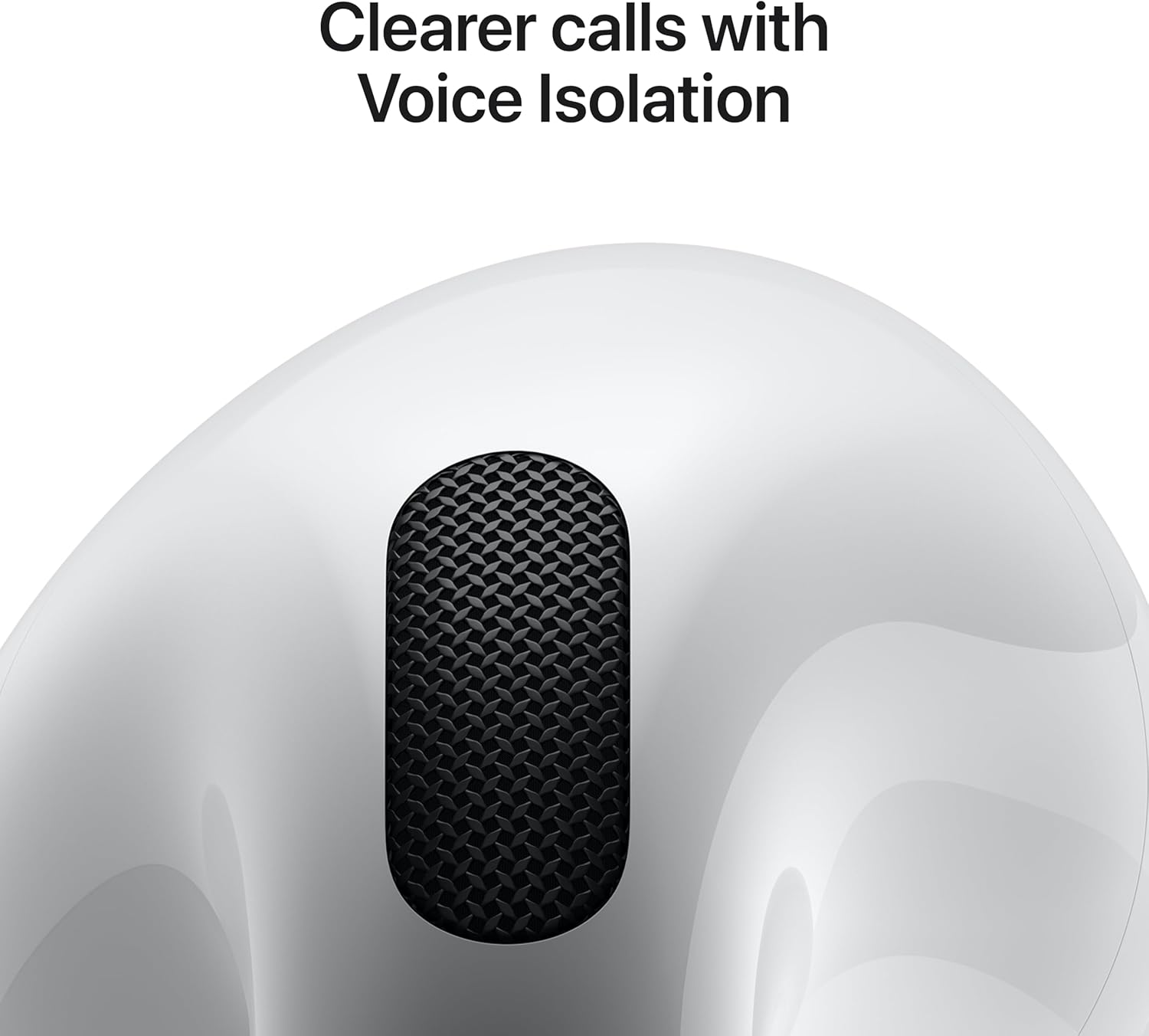
Voice Isolation is one of the more practical additions for anyone who takes calls in noisy places. Apple states that it improves call quality in loud conditions by reducing background noise while isolating and clarifying the sound of your voice for the person on the other end. That is a stated product claim rather than an independently verified result, but it describes a clear use case: phone calls where wind, traffic, or crowd noise would otherwise compete with your voice.
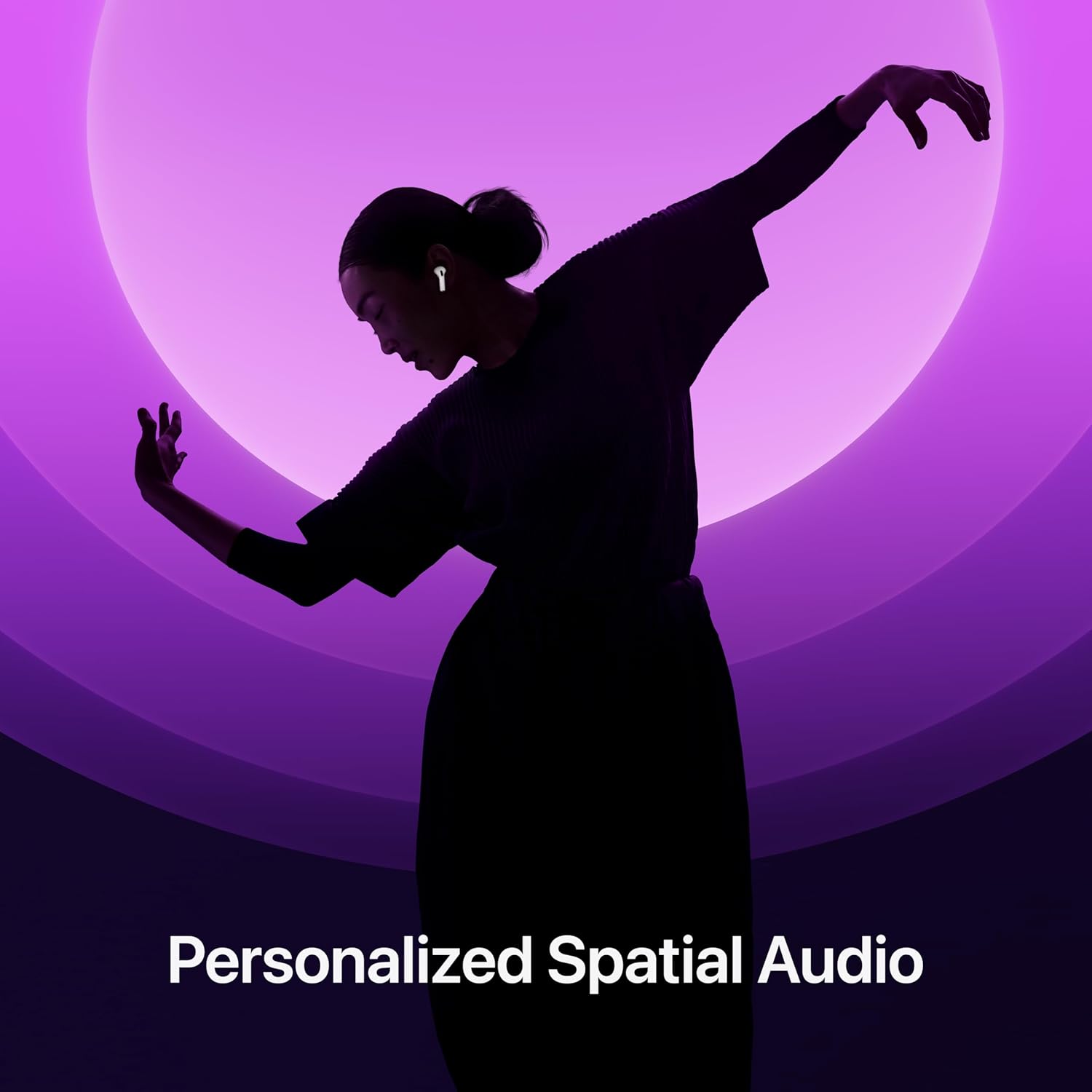
Personalized Spatial Audio with dynamic head tracking is also on board. Apple describes it as placing sound all around you to create a theater-like listening experience for music, TV shows, movies, and games. Dynamic head tracking means the audio field adjusts as you turn your head, which is intended to keep the sense of direction consistent. This feature works best with content and devices that support spatial audio, so the experience will vary depending on what you are watching or listening to.
Siri integration is handled by voice rather than a tap. You can say “Siri” or “Hey Siri” to play a song, make a call, or check your schedule. Siri Interactions go a step further: you can respond to Siri by nodding your head yes or shaking your head no. That is useful when your hands are occupied or when speaking out loud is not convenient.
An optical in-ear sensor manages playback automatically. Audio plays only when the earbuds are worn and pauses when you take them off, which saves battery and removes the need to reach for a control every time you remove an earbud. The Find My app can also help you track down the AirPods and the charging case if they go missing.
Performance and Everyday Experience
Pairing is designed to be quick: place the AirPods near your device and tap Connect on the screen. Audio sharing lets you send a song or show between two sets of AirPods, which is a convenient option for watching or listening together without splitting a single pair.
Durability is addressed with an IP54 rating for both the earbuds and the charging case. That rating covers dust, sweat, and water resistance, and Apple states the AirPods 4 will withstand rain and heavy workouts. For anyone who exercises outdoors or gets caught in wet weather, that rating is a meaningful part of the spec sheet, though it is worth noting that IP54 is a resistance rating rather than a claim of waterproof submersion.
Battery life is quoted at up to 5 hours of listening time on a single charge, with up to 30 hours of total listening time when using the case. Those figures are Apple’s stated estimates and will vary with volume, feature use, and whether spatial audio or voice features are active. The case itself does not add listening time beyond recharging the earbuds, so the 30-hour figure reflects repeated top-ups rather than continuous playback.
Connectivity and Compatibility
The supplied information describes pairing with “your device” and tapping Connect, along with Siri, Find My, and audio sharing. These are Apple ecosystem features, and the AirPods 4 are positioned as Apple wireless earbuds. Beyond that, the source material does not detail specific operating system versions, Android behavior, or codec support, so those details are best confirmed against Apple’s own documentation if cross-platform use matters to you.
Who Are the AirPods 4 Best For?
These earbuds suit listeners who prefer an open-fit design over silicone tips and want the convenience features that come with the Apple ecosystem. The combination of Siri Interactions, automatic play and pause, Find My support, and audio sharing points to someone who moves between calls, music, and video throughout the day and wants those transitions to happen with minimal fiddling.
The IP54 rating and the stated ability to withstand rain and heavy workouts also make them a reasonable option for training and commuting, provided the open fit stays secure for your ears. People who take a lot of calls in noisy environments may find Voice Isolation particularly relevant, since that is the scenario Apple specifically addresses.
On the other hand, anyone who needs the passive noise isolation that comes from a sealed in-ear tip should recognize that this is a different design category. The AirPods 4 are built around comfort and stability in an open fit, not around blocking out the surrounding world.
Final Verdict
The AirPods 4 Wireless Earbuds represent a considered update: a redesigned shape with a shorter stem, a smaller USB-C charging case, the H2 chip, and a feature set that leans heavily on convenience. Personalized Spatial Audio, Voice Isolation, Siri Interactions, automatic in-ear detection, and Find My support all address real moments in daily use rather than adding specs for their own sake. Battery life of up to 5 hours per charge and up to 30 hours with the case is in line with what Apple states for this class of earbud, and the IP54 rating adds a layer of reassurance for workouts and wet weather.
The main consideration is fit philosophy. If you like the open, unsealed feel and want tight integration with Apple devices, the AirPods 4 are a coherent choice. If you prefer a sealed in-ear fit or need detailed cross-platform information, the supplied specifications leave some questions open, and those points are worth checking before you commit.