
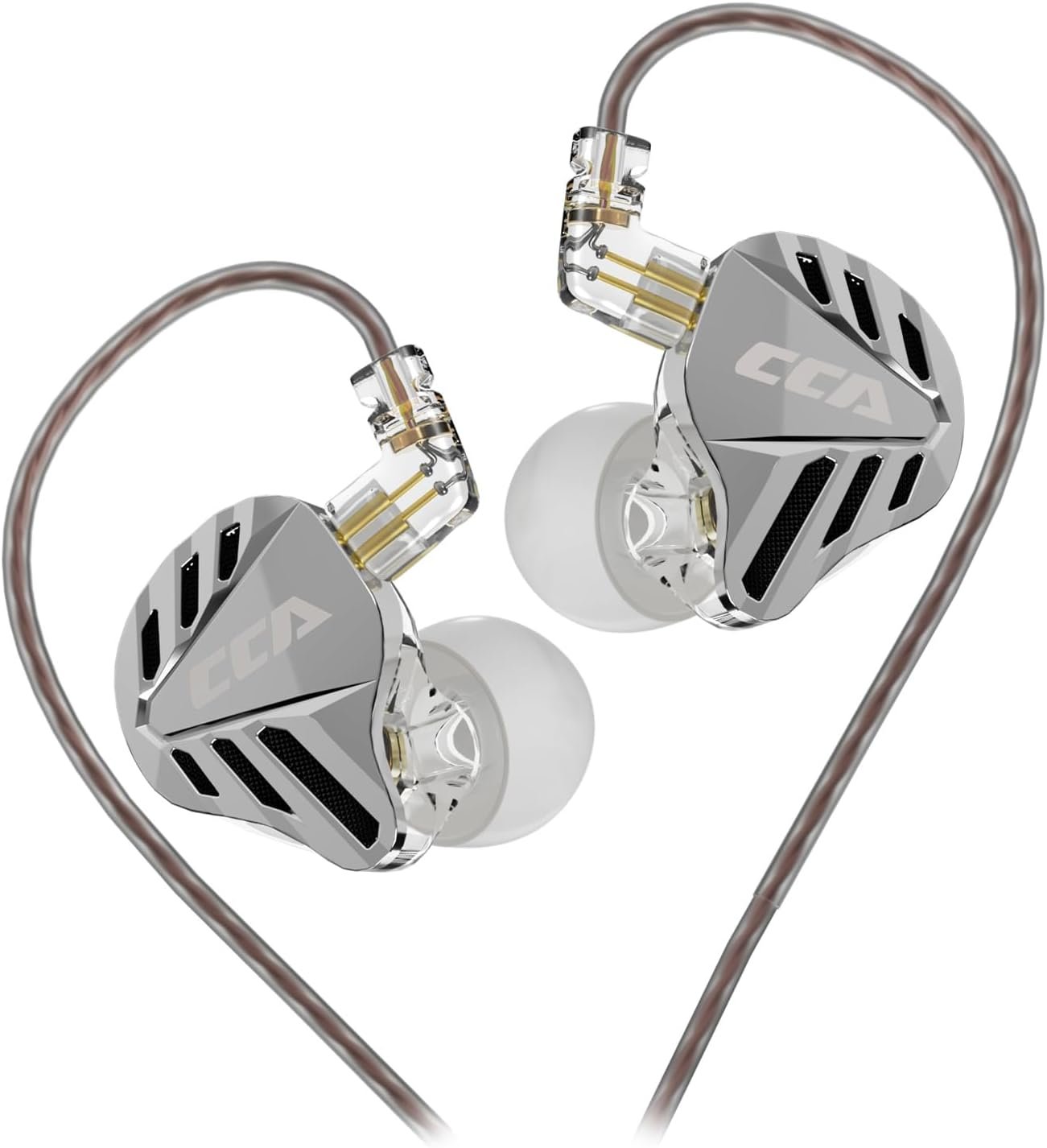


CCA Falcon 2 DD In-Ear Monitor Review: A Wired IEM Built for Gaming and Stage Work
Wired in-ear monitors continue to hold a distinct place in the audio world, particularly for those who need reliable, low-latency sound without worrying about battery life or wireless dropouts. The CCA Falcon 2 DD is a dual-driver IEM that aims to serve a wide range of listeners, from competitive gamers to live performers. With a focus on physical driver design rather than purely digital tuning, this model attempts to deliver a versatile listening experience across different scenarios. This review examines what the Falcon 2 DD offers based on its stated specifications and design intentions.
Design & Build Quality
The physical design of the CCA Falcon 2 DD is centered around comfort and extended wear. Each earbud weighs in at a light 7.8g, which is a notable specification for those who plan to use them during long gaming sessions, rehearsals, or commutes. The housings feature a scientifically optimized shape intended to rest naturally in the ear, rather than relying on a generic fit that may not suit everyone.
A key element of the build is the vented metal acoustic chamber. The use of metal in the chamber adds a sense of structural rigidity, while the venting serves a functional purpose: it is designed to reduce air pressure buildup inside the ear canal. This pressure reduction is a practical consideration for anyone who has experienced fatigue or discomfort from sealed earphones over time. By addressing this issue, the design aims to make the Falcon 2 DD suitable for marathon use cases, whether that means a long gaming session or a lengthy stage performance.
The lightweight nature of the earbuds, combined with the ergonomic shaping and vented chamber, suggests a focus on wearability. While fit is always subjective and depends on individual ear anatomy, the stated design goals here are clearly aimed at minimizing fatigue during prolonged use.
Features & Technology
The core acoustic architecture of the CCA Falcon 2 DD is built around a dual-driver setup. It utilizes a custom 7mm driver paired with an 8mm driver, both of which are dynamic drivers. The two drivers are connected in a unique physical series configuration. This arrangement is described as delivering deep bass, natural vocals, and crystal-clear treble. For an IEM in this category, the use of two dynamic drivers rather than a hybrid setup with a balanced armature is a deliberate choice, likely aimed at producing a cohesive sound signature across the frequency range.
The driver diaphragms are made from LCP, or Liquid Crystal Polymer. This material is noted for its role in reproducing sound with improved clarity. Specifically, the LCP composite diaphragms are stated to help reproduce footsteps, directional effects, and environmental sounds with better definition. This is particularly relevant for competitive gaming, where positional audio cues can be critical.
One of the most significant features of the Falcon 2 DD is the DSP and EQ switching, but this functionality is exclusive to the Type-C version of the product. The built-in DSP processing allows for seamless 7.1 surround sound decoding. An inline remote on the cable enables users to switch between four distinct modes: Hi-Fi Music, Gaming, 7.1 Surround, and Bass Boost. This level of on-the-fly control is a practical feature for users who want to tailor the sound profile to their current activity without needing to access a software app.
It is essential to note the distinction between the versions. The 3.5mm version of the Falcon 2 DD offers standard analog audio without any DSP functions. This means the 4-mode switching and 7.1 surround capabilities are not available on the analog model. Buyers must be aware of this difference when choosing which version to purchase, as the feature set is entirely dependent on the connection type.
Performance & Everyday Experience
When considering the performance of the Falcon 2 DD, it is helpful to look at the intended use cases outlined by the manufacturer. For competitive gaming, the stable wired connection ensures a consistent audio feed without the latency issues that can sometimes plague wireless options. The LCP diaphragms are specifically cited as helping to reproduce directional effects and environmental sounds, which supports the goal of immersive gameplay where hearing an opponent’s footsteps can make a difference.
For musicians and audio professionals, the Falcon 2 DD is positioned as a versatile in-ear monitor. The stated applications include live stage performances, studio tracking, church choirs, and live DJ sets. The dual-driver design is intended to provide exceptional detail retrieval, allowing singers and instrumentalists to monitor individual layers of a mix. The sound isolation properties of the IEM form factor help block out ambient noise, which is useful on a loud stage or in a busy studio environment.
The sound signature, as described, covers deep bass, natural vocals, and clear treble. This combination suggests a balanced approach that avoids overemphasizing any single part of the spectrum. The Bass Boost mode available on the Type-C version offers an option for those who want additional low-end presence, while the Hi-Fi Music mode likely provides a more neutral listening experience for everyday music consumption.
The 7.1 Surround mode is an interesting addition, as it uses DSP processing to create a virtual surround effect through the two physical drivers. This is a feature that may appeal to gamers watching movies or playing titles that support surround sound encoding. However, the effectiveness of virtual surround processing always depends on the quality of the implementation and the source material.
Connectivity & Compatibility
The Falcon 2 DD is available in two versions, each with different connectivity and capabilities. The Type-C version is the fully featured model, offering the DSP processing, 7.1 surround decoding, and the four EQ modes accessible via the inline remote. This version is likely intended for use with modern smartphones, tablets, and laptops that have USB-C ports.
The 3.5mm version, by contrast, is a straightforward analog IEM. It does not include the DSP functions, meaning users will not have access to the EQ switching or surround sound modes. This version is suitable for devices with a standard headphone jack, such as older phones, laptops, desktop audio interfaces, or gaming consoles with analog audio outputs. The choice between the two versions ultimately comes down to the user’s primary devices and whether they want the digital signal processing features.
It is worth noting that the 3.5mm version will rely entirely on the acoustic properties of the dual dynamic drivers and the LCP diaphragms. The Type-C version adds a layer of digital processing on top of that acoustic foundation. Both versions share the same physical design, including the lightweight housings and vented metal chambers.
Who Is This Product Best For?
Based on the supplied information, the CCA Falcon 2 DD is best suited for a few distinct groups. Competitive gamers are an obvious target audience, particularly those who use the Type-C version to take advantage of the 7.1 surround mode and the Gaming EQ preset. The stable wired connection and the clarity of directional audio cues are directly relevant to this use case.
Musicians and performers are another primary audience. The IEM form factor, combined with the sound isolation and detail retrieval, makes the Falcon 2 DD suitable for stage monitoring, studio tracking, and DJ mixing. The lightweight design and comfort features support extended wear during performances or rehearsals.
Finally, general audio enthusiasts who prefer a wired connection and want the flexibility of multiple sound profiles may find the Type-C version appealing. The ability to switch between Hi-Fi Music and Bass Boost modes provides versatility for different genres or listening preferences. For those who do not need digital processing and simply want a dual-driver IEM for analog sources, the 3.5mm version offers a more straightforward option.
Final Verdict
The CCA Falcon 2 DD presents a compelling package for users who want a wired IEM that can adapt to different scenarios. The dual dynamic driver design with LCP diaphragms is aimed at delivering clear, detailed audio across the spectrum, from deep bass to crisp treble. The lightweight, vented metal housings are designed with comfort in mind, addressing the needs of users who wear earbuds for extended periods.
The key differentiator is the Type-C version with its built-in DSP and four-mode EQ switching, which adds significant versatility for gaming and music listening. However, the 3.5mm version lacks these digital features entirely, so the choice of version is critical. The Falcon 2 DD is not a one-size-fits-all product; it is a purpose-built IEM that targets gamers, musicians, and audio enthusiasts who understand the value of a stable wired connection and want a tool that can perform in demanding listening environments.