
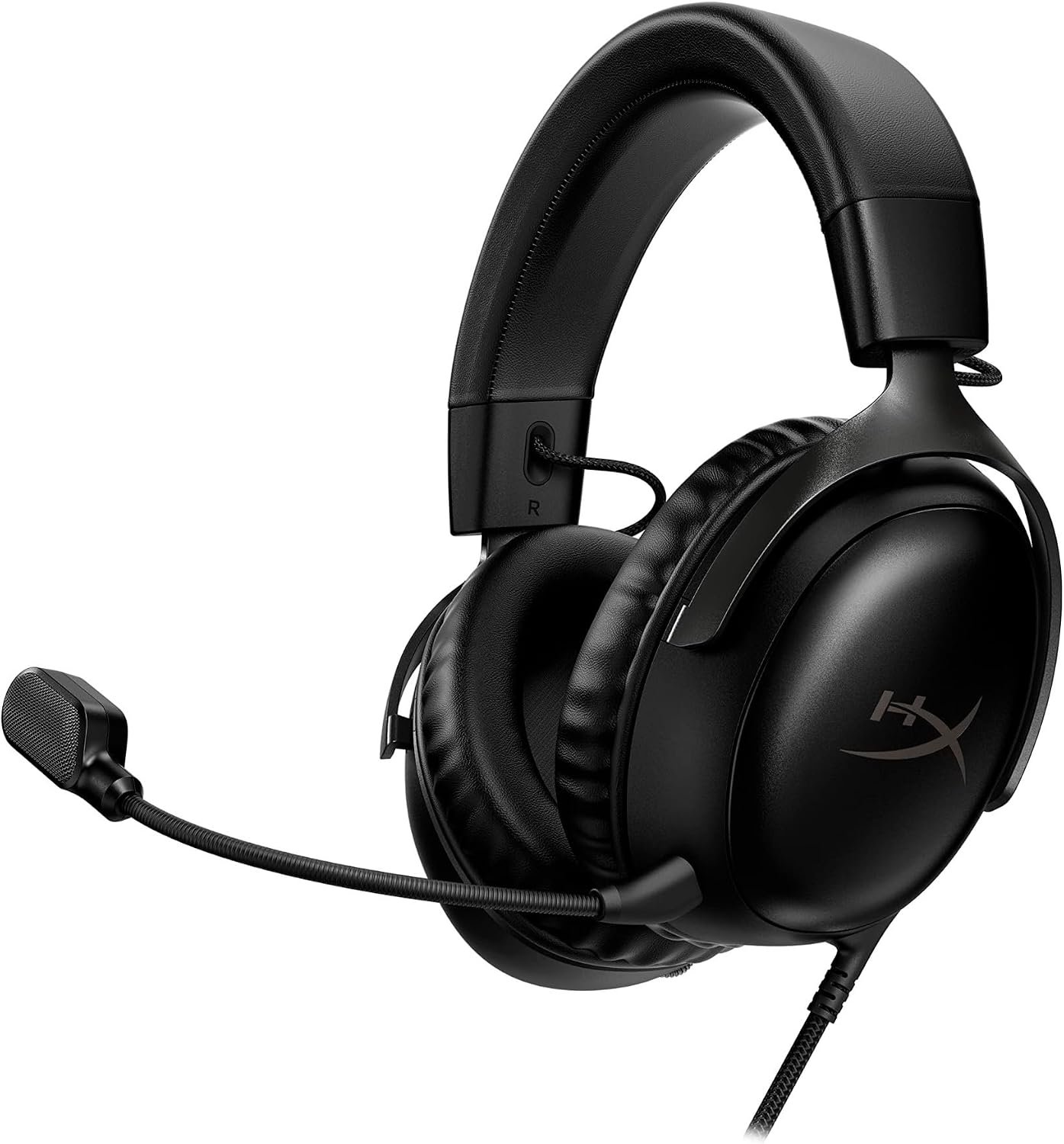




HyperX Cloud III Wired Gaming Headset Review
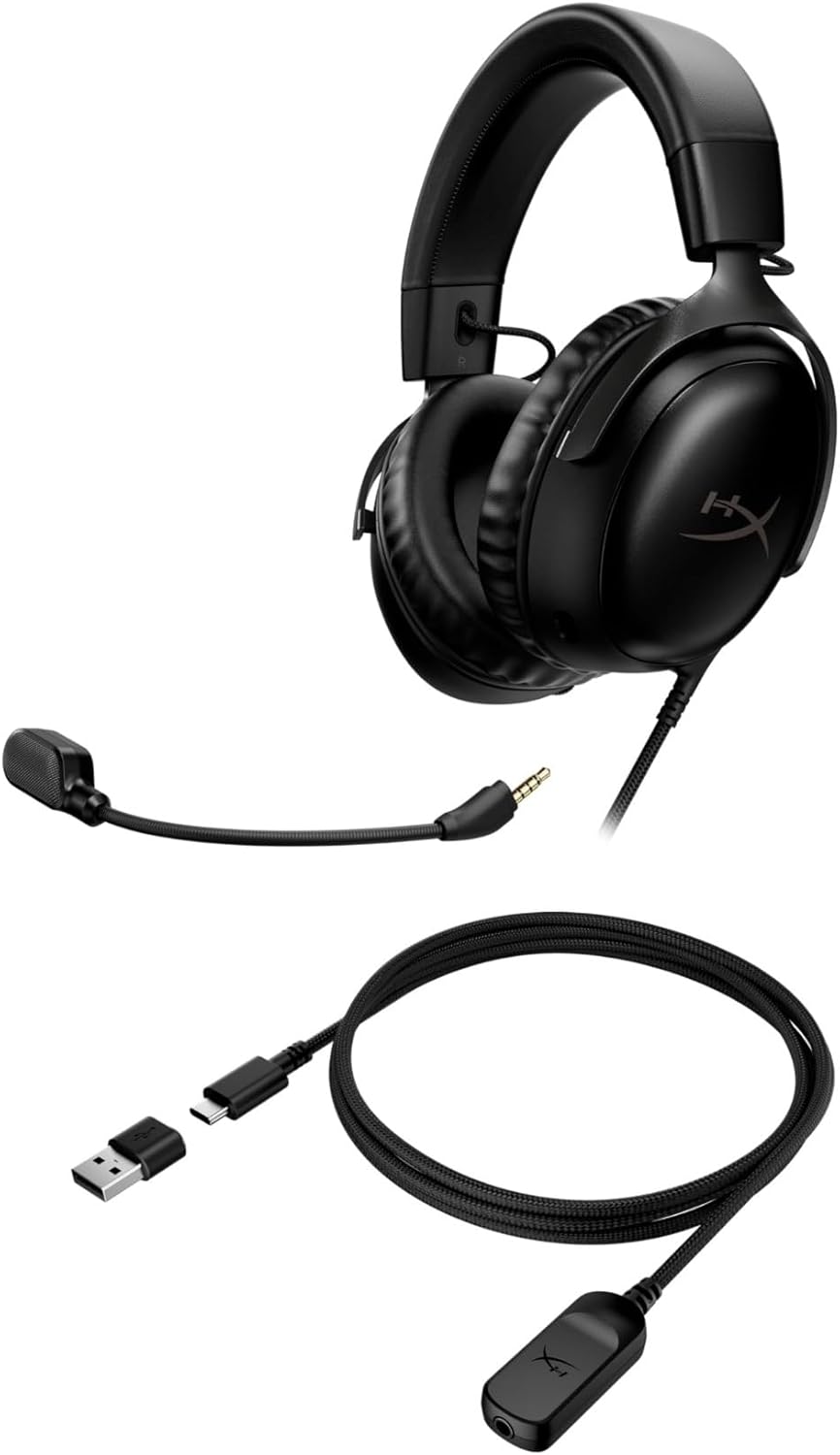
The HyperX Cloud III is a wired gaming headset that carries forward one of the most recognizable names in gaming audio. It is positioned for PC, PS5, and Xbox Series X|S players, and it ships with multiple connection options: USB-C, USB-A, and a 3.5mm connection. That combination of platforms and connectors gives it unusually broad reach for a wired headset, and it sits in a category where players tend to care about three things above all else: how it feels over long sessions, how it sounds in the middle of a firefight, and whether the microphone holds up in voice chat. HyperX has built its messaging around exactly those priorities.
Design and Build Quality
The Cloud III uses an aluminum frame, and HyperX describes the headset as flexible and resilient against travel, accidents, and the kind of mishaps that happen around a desk. That is a stated design claim rather than an independently verified one, but it tells you what the company prioritized. The frame is meant to absorb some abuse rather than crack under it, which matters for a headset that will likely be tossed into a bag, hung on a hook, or yanked off in frustration.
Comfort is the other half of the design story. HyperX frames comfort as the Cloud III’s “DNA,” aimed at gamers who do not want an uncomfortable headset interrupting a full-combo, a speedrun, or a long session in the zone. The headset uses memory foam, which is the material most commonly associated with pressure distribution over time. Taken together, the aluminum frame and memory foam point to a headset built around long sessions rather than short bursts.
Features and Technology
The headline audio feature is a pair of angled 53mm drivers. HyperX states that these drivers were tuned by its audio engineers to deliver what it calls the optimal listening experience, with an emphasis on the dynamic sounds of gaming. The angled orientation is a physical design choice, and the tuning is a deliberate engineering decision rather than an accident of parts selection. In practical terms, this is a headset whose sound profile was shaped with games in mind rather than general music listening alone.
Spatial audio is also part of the package. For gaming specifically, spatial audio is about directional information — being able to place where a sound is coming from rather than simply hearing that it exists. That is a meaningful capability in competitive titles where footsteps, reloads, and ability cues carry information. The Cloud III also supports the three connection types mentioned earlier, which is a feature in its own right: USB-C for modern devices, USB-A for older PCs and consoles, and 3.5mm for anything with a standard headphone jack.
Microphone
HyperX describes the Cloud III’s microphone as upgraded, with a 10mm capsule designed to capture high-quality audio for clear voice chat and calls. Two specific details stand out. First, the mic is noise-cancelling and includes a built-in mesh filter intended to reduce disruptive sounds. Second, there is an LED mic mute indicator, so you can see at a glance whether you are transmitting.
The mesh filter is a physical element rather than a software effect, which is worth noting because it addresses plosives and breath noise at the source. The mute indicator is a small feature that solves a genuinely common problem: the moment of uncertainty about whether you are actually muted. For anyone who plays in voice chat regularly, that indicator is likely to get more use than almost any other feature on the headset.
Performance and Everyday Experience
Because the Cloud III is a wired headset, there is no battery to manage and no charging routine to remember. You plug in and play. That is the central practical difference between this and a wireless alternative, and it shapes how the headset fits into a setup. It stays tethered to whatever it is connected to, which is a trade-off some players accept willingly in exchange for not thinking about power levels.
The multi-connection design also means the Cloud III can move between devices without a separate adapter purchase, at least in the configurations the connectors support. A PC with USB-A, a PS5 or Xbox Series X|S with USB-C, and a device with a 3.5mm jack are all addressed by the included options. That flexibility is one of the more useful aspects of the product for anyone who splits time between a desk and a console.
On the audio side, the angled 53mm drivers and the tuning HyperX describes are aimed at the dynamic range of game audio — explosions, weapon fire, ambient detail, and the layered sound design that modern titles rely on. Spatial audio adds positional information on top of that. The combination is oriented toward immersion and awareness rather than a flat, neutral presentation.
Comfort over time is where the memory foam and the overall design philosophy come into play. HyperX’s framing is explicitly about not letting the headset break your concentration, which is a reasonable way to describe what good comfort actually does: it disappears. Whether the Cloud III achieves that for a given player will depend on head shape and personal preference, as it does with any headset.
Connectivity and Compatibility
The Cloud III is listed for PC, PS5, and Xbox Series X|S, and it offers USB-C, USB-A, and 3.5mm connections. That is a wide net. The 3.5mm option in particular extends compatibility to devices beyond the three named platforms, since it relies on a standard analog jack rather than a proprietary connection. The USB options cover the modern console and PC side.
It is worth being precise here: the product information lists these platforms and connectors, but it does not detail which connector maps to which platform in every case. If you have a specific device in mind, checking the connection requirements for that device against the available options is the sensible approach.
Who Is This Product Best For?
The Cloud III is aimed at gamers who want a wired headset and play across PC, PS5, or Xbox Series X|S. The emphasis on comfort and on a durable aluminum frame suggests it suits players who log long sessions and want a headset that can handle being moved around. The upgraded noise-cancelling microphone with a mesh filter and mute indicator makes it a natural fit for anyone who spends a lot of time in voice chat or on calls. And because it offers USB-C, USB-A, and 3.5mm connections, it works well for players who move between a computer and a console rather than committing to one device.
Final Verdict
The HyperX Cloud III is a wired gaming headset built around a clear set of priorities: comfort, a durable aluminum frame, angled 53mm drivers tuned for game audio, spatial audio support, and an upgraded 10mm noise-cancelling microphone with a mesh filter and mute indicator. Its three connection options — USB-C, USB-A, and 3.5mm — give it broad compatibility across PC, PS5, and Xbox Series X|S.
What it does not offer is wireless freedom, and that is a deliberate part of its identity rather than an oversight. For players who prefer a tethered setup and want a headset that emphasizes long-session comfort and voice chat clarity, the Cloud III addresses those needs directly. For anyone who needs to move around untethered, a wired design will not fit that use case. Within its stated design goals, the Cloud III is a coherent, well-defined option.